

Ceramic Guitar.
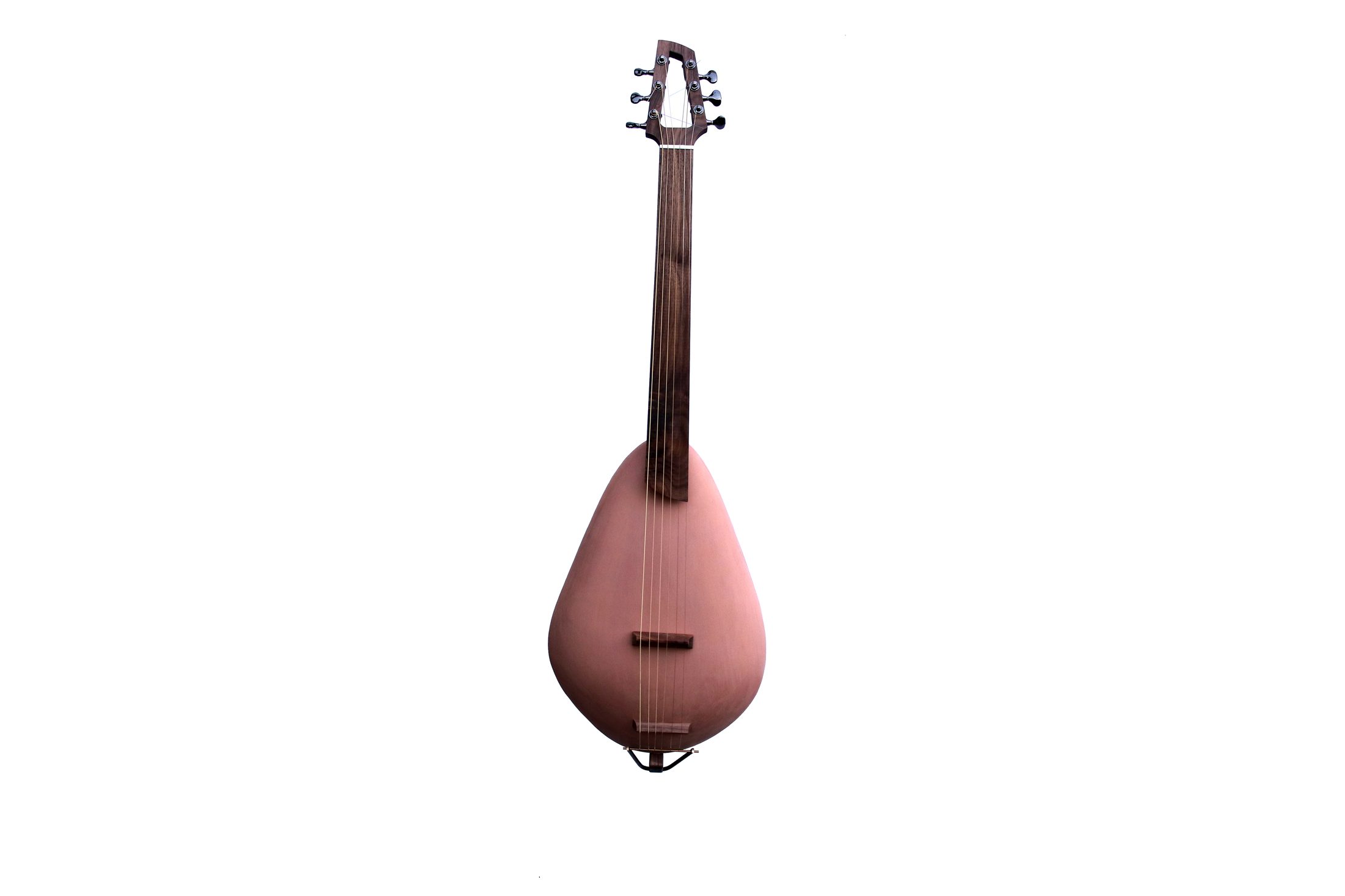
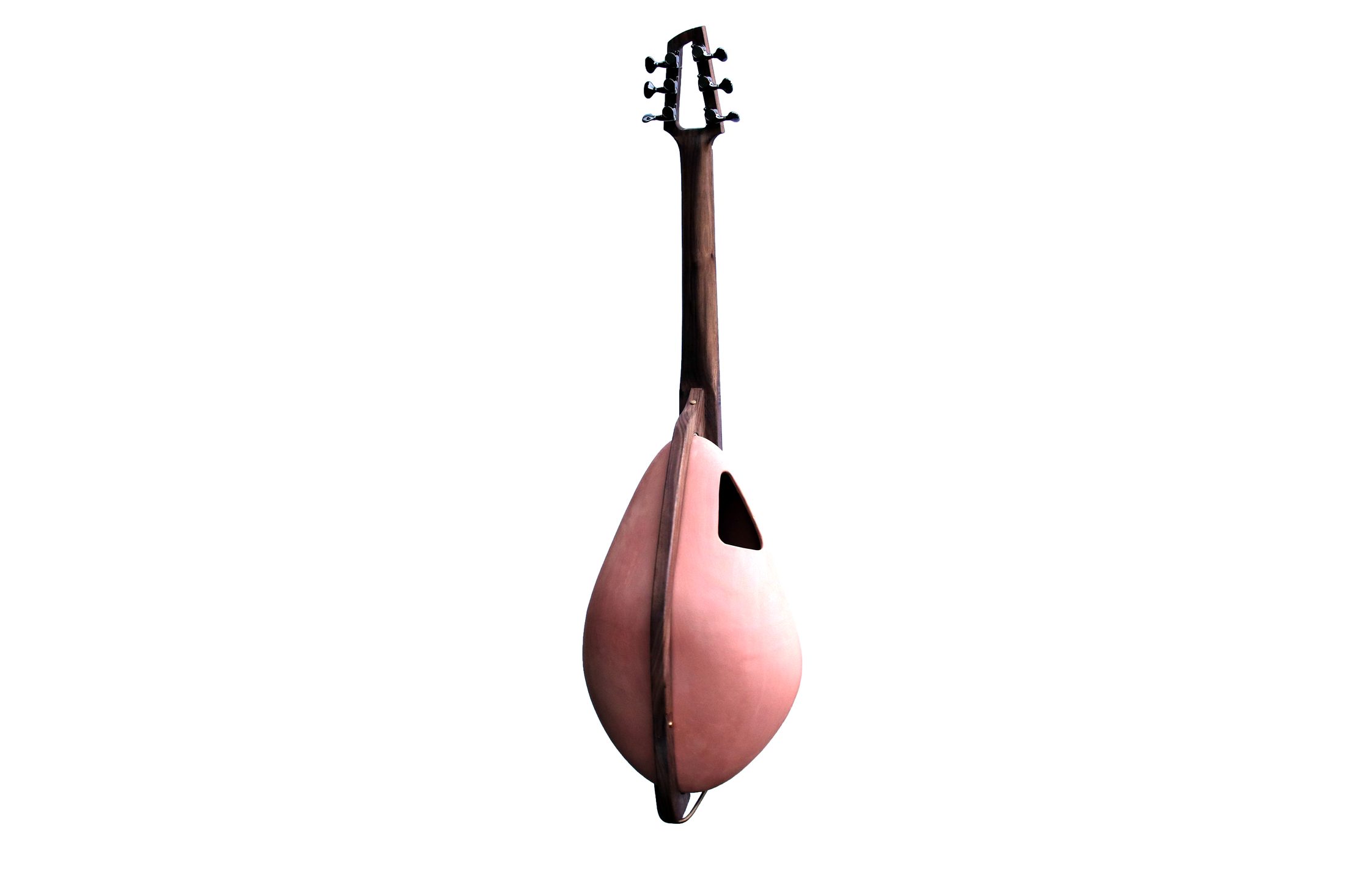
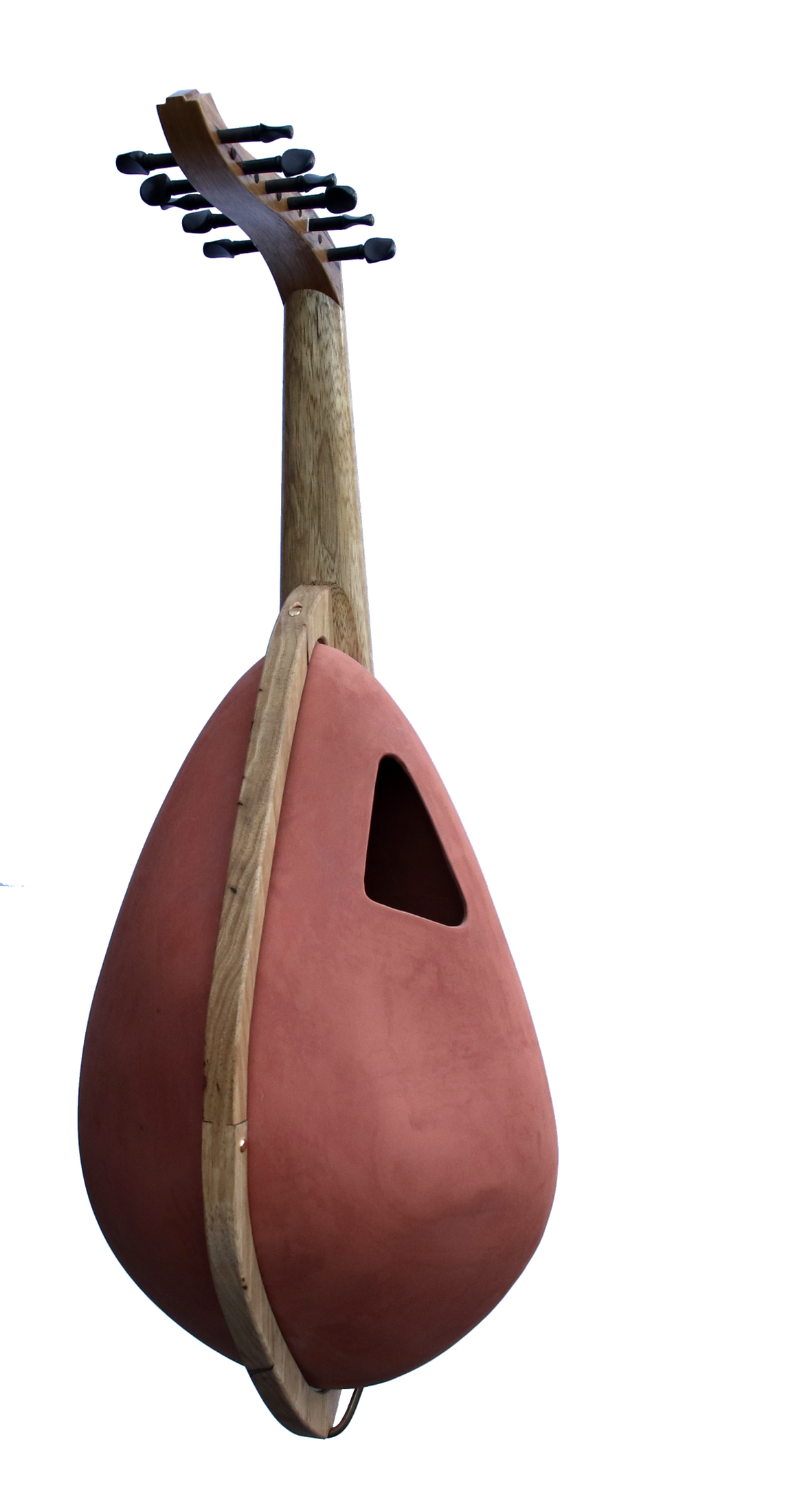
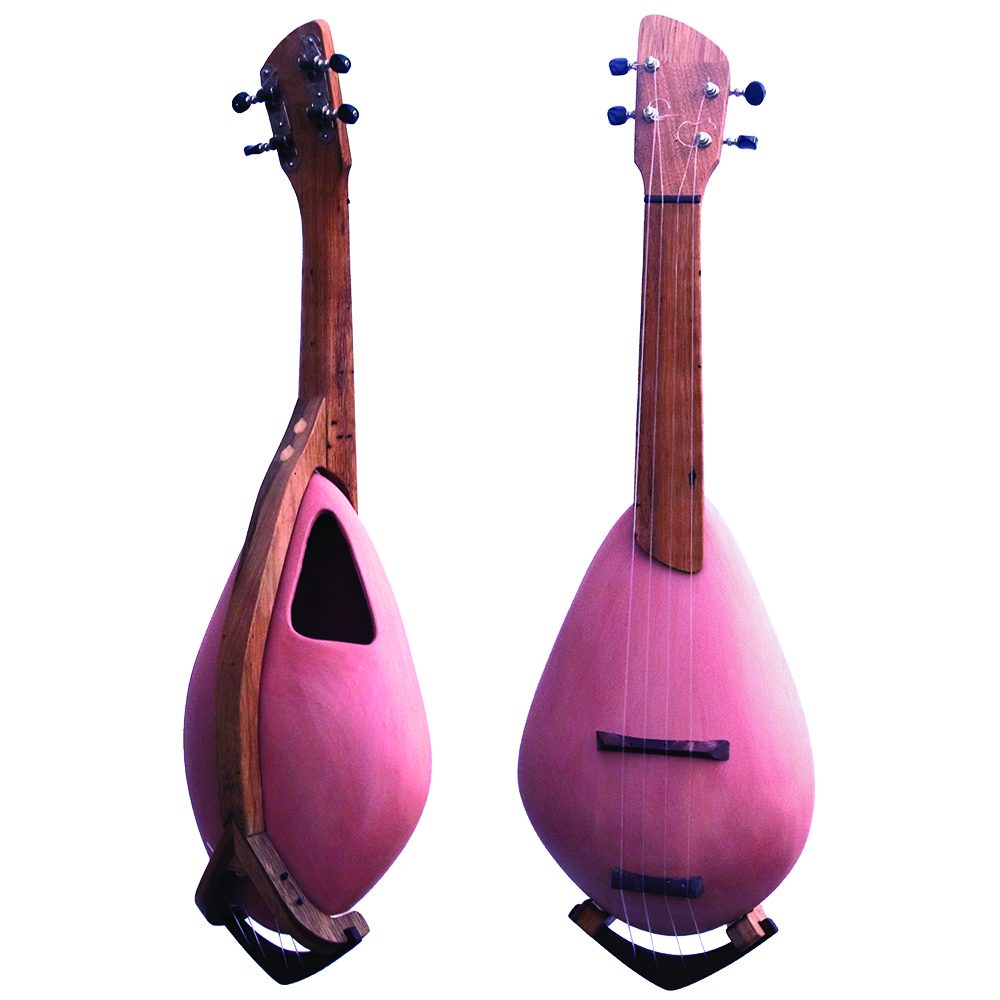
A steel-string acoustic with a porcelain soundbox. The body is built in two halves, joined at the bout, slip-trailed and double-fired so the seam doesn't announce itself.
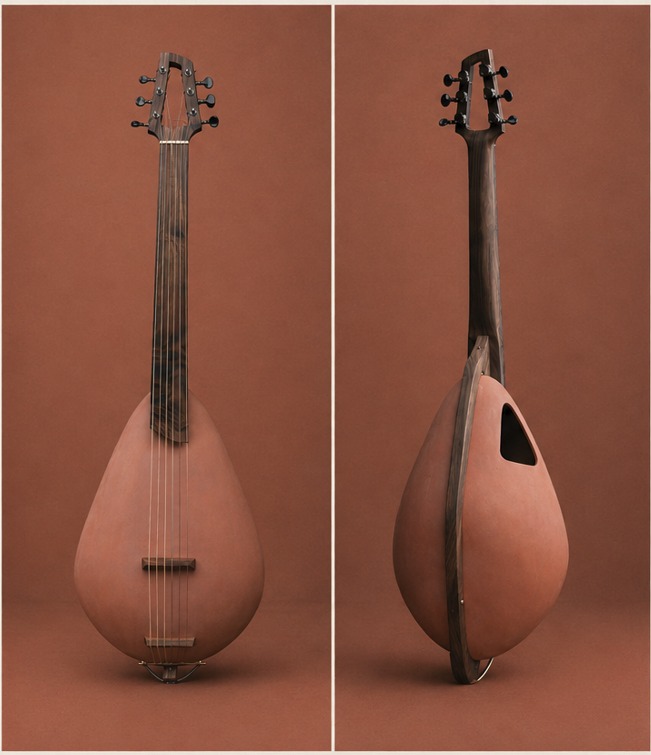
The body answers the string slowly.
The guitar was the project of a year. The first attempts to throw a body in a single piece were abandoned — the geometry of a guitar is not the geometry that comes off a wheel. The body had to be made in two halves, joined at the bout, and the seam had to be slip-trailed and double-fired so that the join would not announce itself either visually or acoustically.
It is a quieter instrument than a wooden guitar. The body answers the string slowly. The attack is softer, sustain is shorter, and the instrument prefers fingerstyle to the flatpick. Played hard, it does not protest — but it does not reward the noise. Played softly, it gives back something a wooden guitar will not.
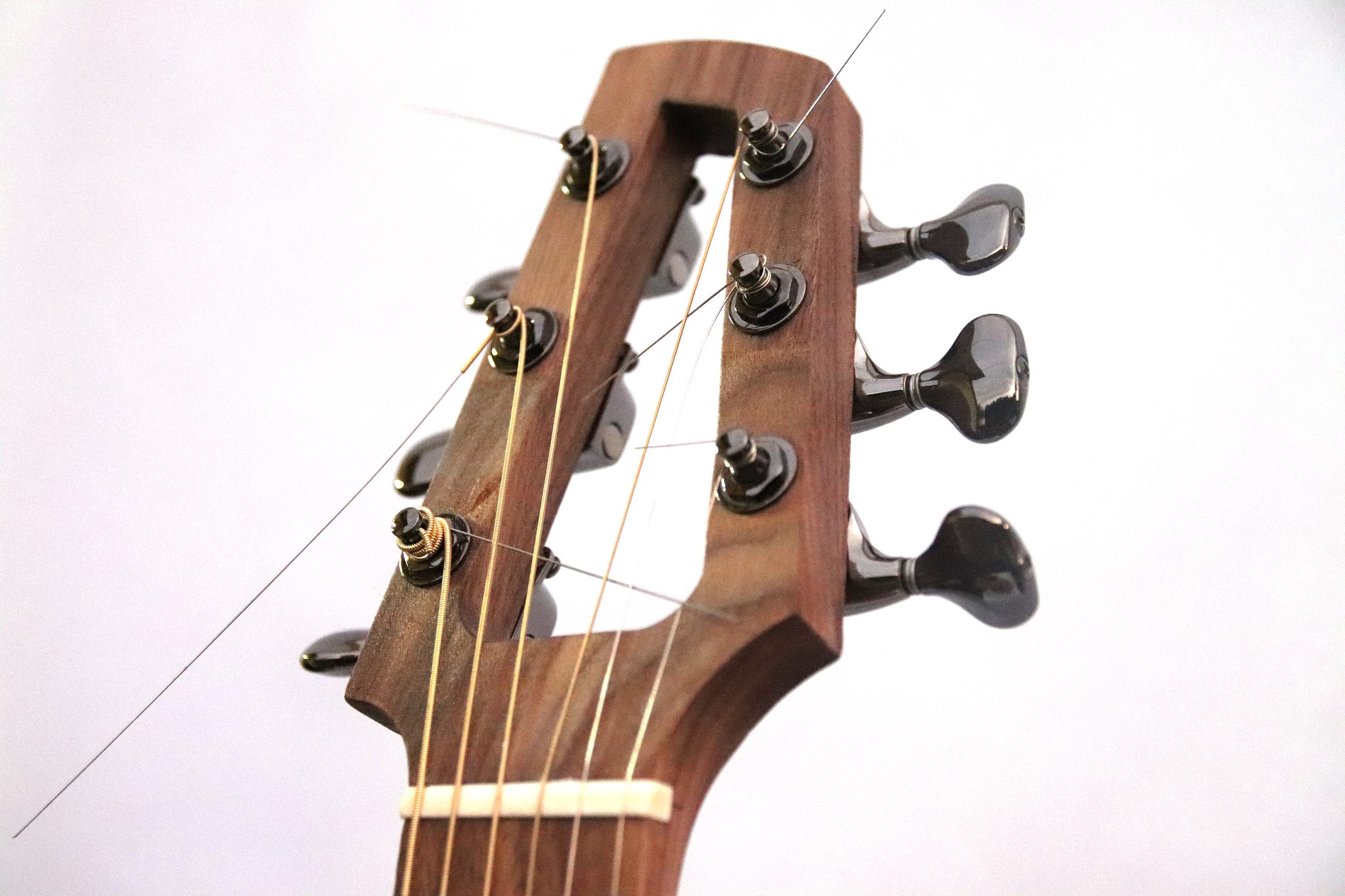
The neck and bridge are walnut, the saddle and nut bone — the points at which energy passes between body and string remain in the materials a guitar player expects. The shell is the thing that has changed.
[TBD — Amit's note on the year of trying to join two clay halves.]
Materials & making.
Two halves joined at the bout. Slip-trailed seam, double-fired so the join doesn't announce itself.
Walnut throughout. Truss reinforced. Fitted, not glued, to the ceramic shoulder.
Hand-cut. The points where energy passes between body and string remain in materials a player expects.
Selected plates.
Make this guitar yours.
Every instrument begins with a conversation. Together we choose the wood for the neck, the finish for the body, the colour, the texture — and where you'd like to play it. The studio sketches a proposal; ninety days from confirmation to your hands.
Begin a conversation.
Commissions, press, exhibitions, talks. I read every message myself. Reply within two working days.